The Cable in the Boot: Planning EV Charging Around a UK Hotel Break
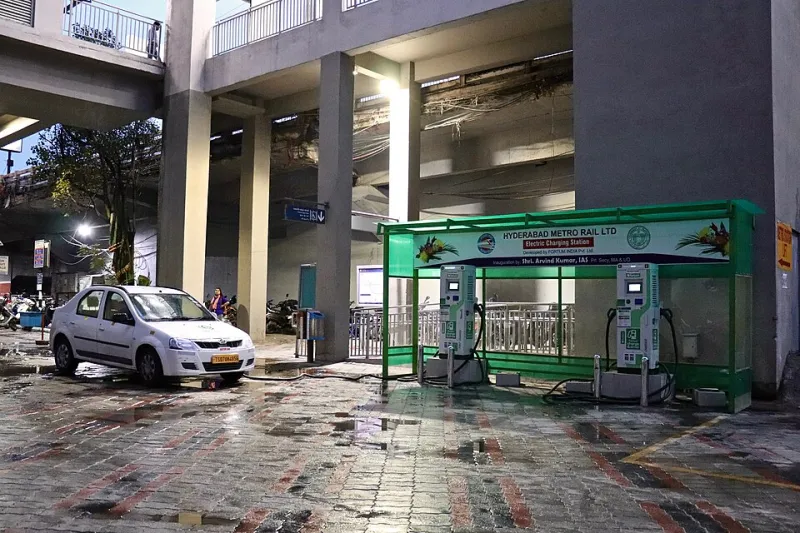
Photo: iMahesh, CC BY-SA 4.0, via Wikimedia Commons
There is a particular kind of quiet panic that arrives at 7.45 on a Sunday morning, somewhere between the last slice of toast and the business of loading the boot. The car has been parked since Friday evening. The charger you assumed was working was, in fact, a lamp post. The nearest rapid point is eleven miles in the wrong direction, and the breakfast room is already clearing away the good jam.
None of this needs to happen. EV charging at a UK hotel is not a dark art, but it is a detail best sorted before you pack the bag, not after you have unpacked it. The questions are simple enough. The trick is asking them at the right moment — when you book, or in the quiet days before arrival — rather than discovering the answers on the forecourt at dusk.
Start With the Socket, Not the Sticker
Hotels are fond of the little blue badge beside the word eco. It tells you a charge point exists. It rarely tells you what sort of charge point it is, whether it is tethered, or whether the cable in your boot will actually fit.
Most UK hotel charge points are AC units with a Type 2 connector, either tethered to the post or left as a socket for your own cable. If your car came with a Type 2 cable, you are in reasonable shape. If it did not, ask. A surprising number of drivers arrive with only a three-pin domestic lead and a hopeful expression.
Rapid charging is a different matter. A CCS connector is what most modern EVs use for speedy top-ups, but rapid units are less common in hotel car parks than they are at motorway services. They also tend to be shared, occasionally blocked, and not always the peaceful overnight solution you had in mind. Ask what is actually on site, not what the booking site implies.
The Speed Question: Trickle, Fast, or Just Right
A 7kW charge point is the quiet workhorse of the hotel car park. Over a ten-hour overnight stay it can add a useful chunk of range — often enough to top up a typical family EV from half empty to full, or thereabouts. It is not dramatic. It is not meant to be. It is the equivalent of a good night's sleep for the car.
A 22kW unit sounds better on paper, but only if your car can accept three-phase AC charging at that rate. Many cannot, and will happily take 11kW or less regardless of what the post offers. A 50kW rapid will fill you faster, but it may also carry a higher tariff and a session fee, and it may be unnecessary if you are staying the night anyway.
The humble three-pin socket is best treated as an emergency measure. It is slow, it can be awkward in wet weather, and some hotels understandably discourage it. If a hotel mentions a domestic socket, ask whether it is genuinely intended for guest charging or simply the nearest plug behind reception.
Bays, Bookings and the Honest Car Park
There is a difference between a charge point and a reserved charge point. Ask whether the bay can be booked, how long it is held, and what happens if another guest is already plugged in when you arrive. Some hotels operate a first-come, first-served arrangement; others will note your registration and keep a space. Both can work, provided you know which one you are dealing with.
It is also worth asking how the bays are enforced. A bright green sign is not much use if a petrol car has been parked across it since lunchtime. Some sites use barriers, clamping or penalty notices; others rely on the honour system and a hopeful email. Neither is unreasonable, but the practical answer matters when you are the one circling the car park at 9pm.
If the car park is small, ask where the charge points sit in relation to the entrance. A bay that requires reversing through a narrow archway is a different proposition from one beside the front door. These are not fussy questions. They are the sort of thing a thoughtful hotel should be able to answer without a staff huddle.
What It Costs After Dark
Overnight charging costs vary more than you might expect. Some hotels include a charge in the room rate, some bill per kWh, some levy a flat session fee, and some hand the whole thing over to a network app. A few add an idle fee if you remain plugged in after the charge has finished — sensible in a busy car park, less welcome if you are asleep.
Ask whether payment is by contactless card, app, or room account. Ask whether there is a minimum spend. Ask if the tariff changes after a certain hour. None of this needs to be a negotiation; it is simply the same sort of check you would make before leaving the car in a pay-and-display for the weekend.
In 2026, the charging map is fuller than it was, but hotel car parks remain a mixed bag. The best ones are clear about what they offer and what it costs. The vague ones are not being coy; they often simply have not thought it through from the driver's seat.
When the Car Park Says No
Sometimes the answer is that the hotel has no charging at all, or that the single point is out of service. That is not a reason to cancel the break. It is a reason to plan a top-up nearby.
Look for public charge points within a short walk or drive of the hotel, and check their connector type and recent reliability rather than relying on an old listing. Arrive with a buffer rather than a hope. If you are staying somewhere rural, a rapid point on the route in can be more useful than a slow point you cannot reach. And if the hotel car park is full, ask whether you can leave the car in an overflow area and move it later. A little honesty on both sides usually goes a long way.
The Pre-Arrival Email That Saves a Scramble
A short note before you travel can save a long conversation at reception. Mention your car, your connector, and roughly how much charge you need. Ask whether the bay is bookable, what the tariff is, and whether you need your own cable. Keep it friendly and brief. Most hotels would rather answer three questions by email than solve a problem in the dark.
A Full Battery and a Clear Head
The car is part of the trip now, whether we like it or not. A little planning around the plug is not an admission that the break is complicated; it is simply the modern equivalent of checking the route and packing the umbrella. Ask the right questions early, arrive with a margin, and the morning drive home can be about the next stop rather than the nearest charger. That is the sort of start to the day a good hotel should give you.