The Space Between Arrival and Check-In: Making Sense of UK Hotel Parking

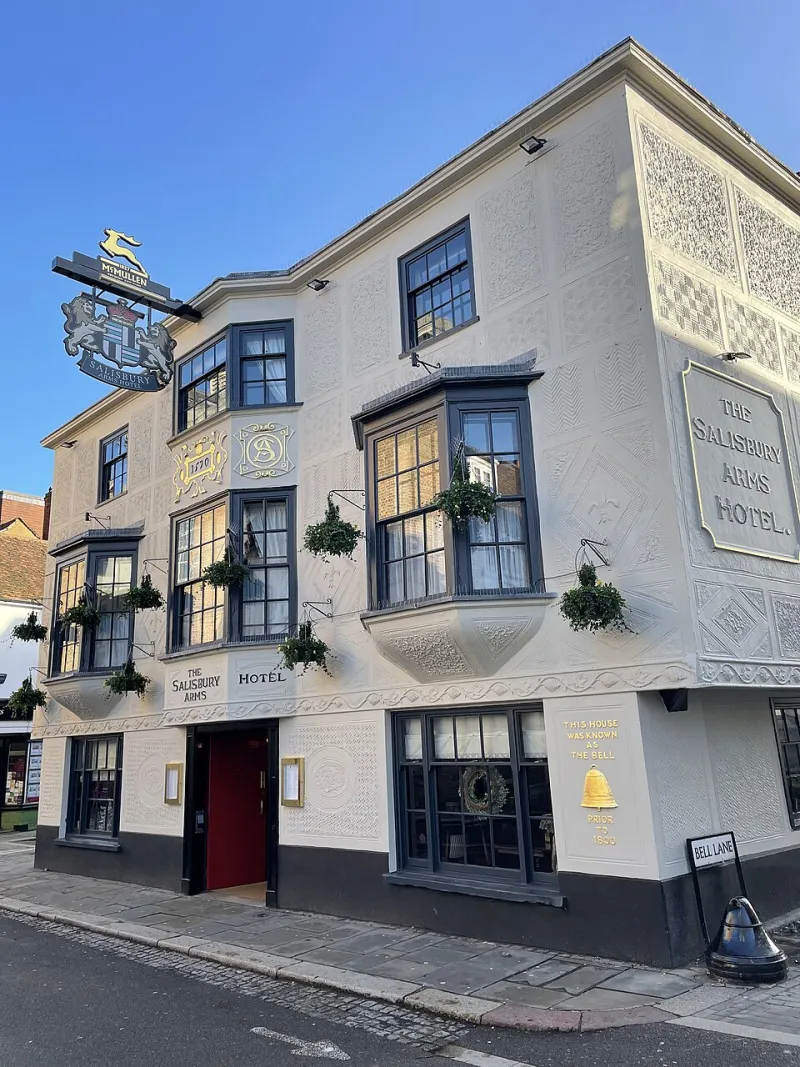
Photo: David Howard , CC BY-SA 2.0, via Wikimedia Commons
Parking is one of those hotel details that tends to get skimmed. You look at the room, the rate, maybe the breakfast, and the car park gets a glance on the way past. That is understandable. But in the UK, where a town-centre hotel might have six spaces, a height barrier, and a permit system run from reception, the parking policy can make the difference between a smooth arrival and a slow lap of the one-way system.
At PJ Hotel, we like the practical bits of a stay to be quietly sorted. Parking is not glamorous, but it is part of the welcome. So before you book, it is worth reading the car-park clause with the same attention you give the check-in time.
On-site does not always mean on the doorstep
A hotel listing that says “on-site parking” can mean several things. It might be a small courtyard behind the building, a shared deck with the neighbouring restaurant, or a handful of bays marked out in a narrow service lane. None of those is a problem, but they are not the same as a spacious car park you can sweep into without a second thought.
Look for the phrase “subject to availability” and take it literally. In smaller independent stays, parking is often first-come, first-served, and the hotel cannot reserve a space unless it says so in writing. If the booking page mentions a charge, check whether that is per night, per stay, or per 24-hour period. A £12 overnight fee is quite different from £12 every time you leave and return.
The words that do the real work
Hotel parking descriptions are short, so every word tends to earn its place. “Nearby” usually means a separate car park, perhaps council-run or commercial, a few minutes’ walk away. That can be perfectly fine, especially in a city, but it helps to know whether you can unload at the door first and whether the car park shuts overnight.
“Limited spaces” is another phrase worth pausing over. It does not mean there will be none, but it does mean you should have a plan B. Check the hotel’s own directions rather than relying on sat nav alone. In older UK towns, the postcode can drop you at the front door of a pedestrianised street while the actual car park entrance sits around the back, off a different road entirely.
If the hotel offers a discount with a local car park, read how it works. Some validate a ticket at reception; others use a code or a parking app. A little prep here saves you standing in reception later with a phone in one hand and a ticket in the other.
Small details that shape the morning
Height restrictions are easy to miss and hard to argue with. Multi-storey car parks in particular can have low entry bars, and a roof box or a taller vehicle can turn a straightforward arrival into a reversal. The hotel may not know the exact height of a nearby car park, so check the car park operator’s information if this matters to you.
Electric vehicle charging is another detail that has moved from niche to normal. If you need a charge, confirm whether the hotel has a charger, whether it is for guests only, and whether you need to bring your own cable. A charger listed on a booking site may be a single point shared with staff vehicles, so it is worth a quick email if charging is central to your journey.
Then there are the loading bays. Many UK hotels have nowhere to leave a car while you check in, but they may have a short-stay bay outside for unloading. Use it for its intended purpose, move the car promptly, and ask reception where you should go next. It is a small courtesy that keeps the arrival calm for everyone.
A pre-booking checklist
Before you confirm a room, run through the practical points:
- Is the parking on-site, nearby, or simply “available in the area”?
- Is it free, charged per night, or charged per exit?
- Can you reserve a space, or is it first-come, first-served?
- Are there height, width, or vehicle-type restrictions?
- Is there anywhere to unload luggage before parking properly?
- If you need EV charging, is it guaranteed and compatible?
- Does the car park close overnight or have restricted access times?
- Is there a permit, code, or ticket to sort out at reception?
A quick note in your booking, or a short call to the hotel, can clear up most of these. It also gives the team a chance to flag anything they think you should know. Good hotels would rather tell you about the narrow entrance in advance than watch you discover it at 5pm on a Friday.
Arrival day, without the circling
On the day itself, keep the parking plan where you can see it. If you are unloading first, do that, then move the car before you settle in. If you are using a nearby car park, pay for the time you need and keep the ticket or app confirmation handy. If reception needs to validate anything, ask when you check in rather than leaving it until the morning.
And if the car park is full, ask the team what they suggest. They will usually know the next best option, the quietest time to move the car, or the street where the restrictions change after 6pm. That local knowledge is part of what makes a comfortable stay feel comfortable.
Parking will never be the most memorable part of a UK hotel break. But when it is clear, easy, and sorted before you arrive, it does something useful: it gets the trip started on the right note. And that is worth a minute of reading before you book.