The Folder by the Kettle: What a UK Hotel Tells You Before You Ask
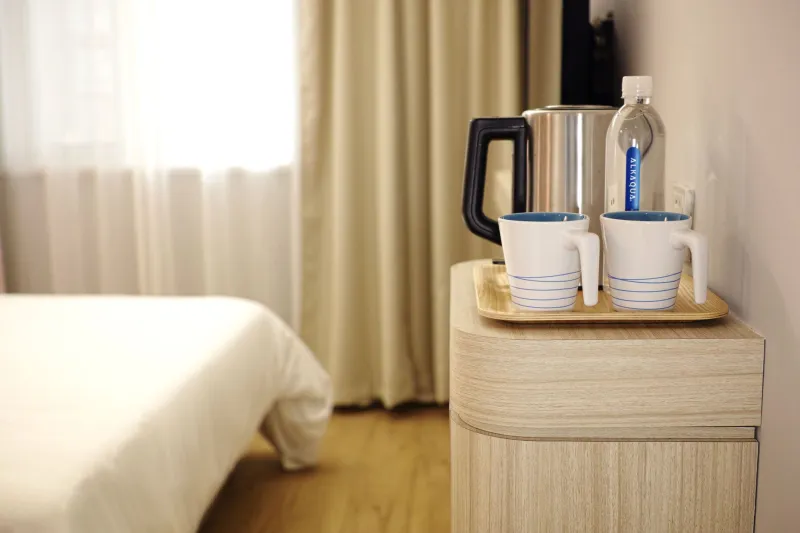
You’ve got the key card. You’ve found the room. The bag is on the bed and the kettle is already making its case for attention. Then, somewhere between the tea tray and the television remote, you spot it: the folder.
It might be a slim plastic wallet, a leather-look binder, or a few laminated sheets clipped together. It is rarely beautiful. It is almost always useful. And yet, for all the money spent on websites, booking engines and carefully lit photography, the guest folder remains one of the most honest things a UK hotel can offer. It is the part of the stay that has to answer real questions, not imagined ones.
A conversation, not a brochure
A good folder reads as though someone has actually stayed in the room. It knows that you might want to know what time breakfast finishes, whether the Wi-Fi password has capital letters in it, and how to work the shower without a degree in plumbing. It does not assume you have memorised the website. It does not pretend that the only thing you need is a picture of the nearest beach.
The best versions feel like a quiet word from the owner or manager: here’s what you need, here’s what we recommend, here’s who to call if something goes wrong. That tone matters. A folder that says “Please ask at reception if you need anything” is fine. A folder that answers the obvious questions before you have to ask them is better.
The small print that earns its keep
There are certain details that should be in every UK hotel folder, and their presence or absence tells you a lot. Breakfast times are the classic. Not just “breakfast is served”, but when it starts, when it ends, whether there is a rush at 9am on a Sunday, and whether you can get a pot of tea before the cooked stuff arrives. Wi-Fi details belong there too, written clearly rather than buried under a QR code that sends you to a login page you’ll never find again.
Checkout time is another. So is the answer to the parking question: whether the car can stay after checkout, whether the barrier needs a code, and whether the nearest pay-and-display is a five-minute walk or a fifteen-minute hike. Taxi numbers are a small but mighty inclusion. In a rural part of the country, a reliable local cab firm is worth more than a hundred links to national apps that may not have a driver within ten miles.
And then there are the quiet practicalities: how to reach reception after hours, what to do with the key card, whether the tap water is fine to drink, and where the nearest cashpoint is if the card machine has decided to have a moment.
Local knowledge, not just local links
The local recommendations section is where folders either shine or fall flat. A list of “nearby attractions” copied from a tourism board is easy to ignore. A handwritten note that the walk along the river is muddy but worth it, that the pub at the top of the hill serves food until 8.30pm, and that the bus into town stops outside the church every hour, is genuinely useful.
This is where the folder becomes a form of hospitality. It is not just telling you what exists; it is telling you what someone who lives there would do. A good folder might mention the short cut to the beach, the bakery that sells out by 10am, or the fact that the nearest supermarket is a drive rather than a stroll. It might also be honest about the limitations: the road is noisy on a Friday night, the restaurant is closed on Mondays, the Wi-Fi is patchy in the back bedroom. That kind of honesty is worth more than a glossy brochure.
What’s missing speaks volumes
You can learn as much from what a folder leaves out as from what it includes. If there is no information about breakfast, you’ll wonder whether it’s included or extra. If there is no checkout time, you’ll be guessing. If the Wi-Fi password is missing, you’ll be ringing reception. If there is no mention of local transport, you’ll assume the hotel expects you to drive everywhere.
None of these are disasters. But they are small friction points, and they add up. A folder that has been thrown together at the last minute tells you something about how the rest of the stay might be run. A folder that has been updated, checked and thoughtfully arranged tells you that someone cares about the details. In a UK hotel market full of beautiful websites and uneven follow-through, that is a quiet signal worth noticing.
Paper versus the QR code
Many hotels have moved to QR codes, and there are good reasons for that: they are cheap to update, they save paper, and they can link to far more information than a printed page. But a QR code is only as good as the signal and the guest’s patience. A folder you can pick up, flick through and leave open on the desk while you eat a biscuit has a certain low-tech charm. It also works when the Wi-Fi doesn’t.
The ideal is probably a mix: a short printed sheet with the essentials, and a QR code for the deeper stuff. But if a hotel has to choose, the printed folder still has the edge for the simple reason that it meets you where you are. It doesn’t ask you to download anything. It doesn’t expire. It just sits there, waiting to be read.
A quiet test of hospitality
The guest folder is not the reason you book a hotel. It is not the thread count or the view or the breakfast. But it is one of the clearest tests of whether a place is actually being run with care. It is the difference between a stay that feels assembled and one that feels hosted.
So next time you check in, before you unpack and before you put the kettle on, pick up the folder. Read it. It might tell you where to eat, how to get to the beach, and what time breakfast ends. And in the process, it will tell you something about the people who run the place. In Britain’s hotel scene, that is an underrated read indeed.