Twenty-Four Hours and a Verdict: What One Night in a UK Hotel Can Honestly Tell You
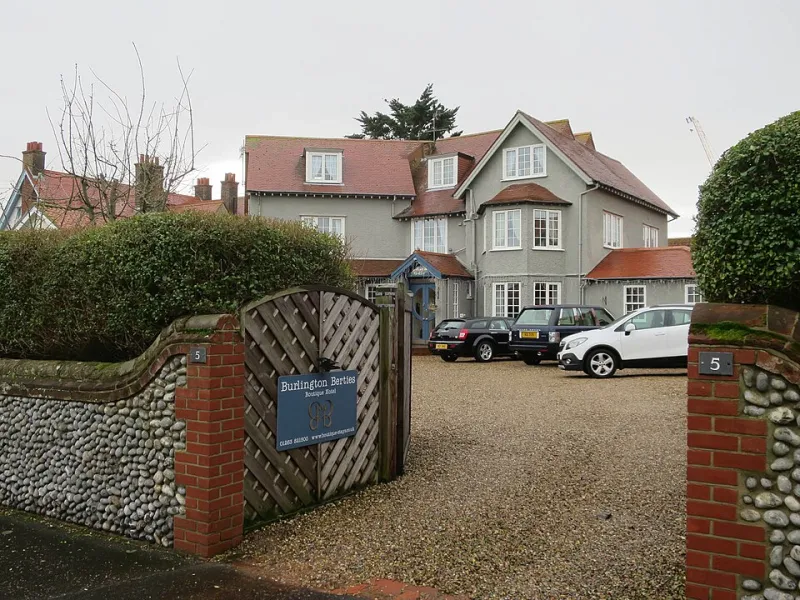
Photo: Hugh Venables , CC BY-SA 2.0, via Wikimedia Commons
I have checked into a hotel at four in the afternoon convinced I'd found a gem, and checked out at ten the next morning equally convinced I'd been sold a story. I've also arrived tired, grumpy and unimpressed, then left wishing I'd booked three nights. One night is a small sample size. But it isn't nothing — and it's worth knowing which parts of the verdict you can actually trust.
The one-night stay is doing more work than we admit
Most UK hotel breaks are short. A Friday to Saturday, a stopover on the way somewhere else, a single night after a wedding or a gig. We ask an enormous amount of those twenty-four hours: we want the room to feel like a treat, the bed to undo a bad week, the breakfast to justify getting up, and the staff to be warm without hovering. Then we judge the entire property on it.
That isn't unreasonable. It's just worth being honest about what the format can carry.
What a single night genuinely exposes
Quite a lot, as it happens. A night is long enough to test the things that actually shape comfort. How the bed feels after six hours rather than six minutes. Whether the room is quiet at eleven and again at six, when the delivery van arrives. Whether the shower holds its temperature. Whether the heating has a mind of its own. Whether the corridor light leaks under the door.
None of that is glamorous, but it's what you remember. Nobody reminisces about the wallpaper. People absolutely remember lying awake listening to a boiler.
The small signals worth watching
I keep a mental checklist now, and none of it needs more than a night.
- The check-in. Was it quick because it was efficient, or quick because nobody was paying attention? Did anyone ask why you were there, or offer a map?
- The key. A real key, a card, an app — and did the explanation assume you'd done this before?
- Hooks and surfaces. Somewhere to hang a coat, park a case, rest a cup. A room without them is a room designed for a photograph.
- Sockets by the bed. Still the quickest way to tell whether anyone has thought about a guest's evening.
- Lighting. Two settings — blinding and dark — is a tell. So is a bedside lamp you can't reach without getting up.
- The bathroom's small print. Water pressure, a shelf for toiletries, a towel rail that's actually warm, a mirror that doesn't fog beyond use.
- Breakfast timing. Whether the window is realistic, and whether the room fills in a rush at half nine.
- The goodbye. Did anyone ask how it was, and did they seem interested in the answer?
The simple request test
If you want just one measurement, use this: ask for something small and mildly inconvenient. An extra pillow at nine in the evening. Half an hour's later checkout. A recommendation for dinner that isn't the obvious place on the corner.
How a hotel handles a modest request says more about its character than the decor ever will. A cheerful yes, a workable compromise, or a plain no delivered with an apology — all fine. What isn't fine is being made to feel like a nuisance for asking. And you'll only find that out by asking.
What one night cannot possibly tell you
Here's the honest limit. A single night won't show you how a place behaves when it's full, or when it's half empty and running on a skeleton crew. It won't reveal whether the breakfast you loved on a quiet Tuesday is the same breakfast when forty people arrive at once. It won't tell you if the room next door is a family suite, whether the walls are thinner on the second floor, or how the team copes with a genuine problem rather than a pillow.
It also won't tell you much about repetition — and repetition is what separates a place that happened to work from a place you'd go back to. Consistency is invisible in twenty-four hours.
So when is one night enough?
One night is enough when the stay is functional: a stopover, a work trip, a bed before an early flight from a regional airport, a room after a party. Judge the bed, the shower, the noise and the exit, and let the rest go. It's also enough when you're using it as reconnaissance — a deliberate trial run before committing to a longer stay later in the year.
And it's enough when the signals are clearly wrong. If the request test fails badly and the room is impractical, a second night rarely redeems it.
When to book the second
Book longer when the property itself is the point. Small independent hotels, country houses, anywhere with a garden, a kitchen worth exploring or a location you'd rather walk from than drive to — these reward time. Two nights let you unpack, stop performing the holiday, and have one unplanned afternoon. That's usually the bit you remember.
My rough rule: one night to test, two to settle, three before you claim to know a place. Anything less is a snapshot — which is fine, as long as you don't mistake it for the whole album.